Coming soon to Kickstarter
QuickVolt
A compact CV/CC bench power supply.
0 to 31 V. 0 to 4 A. 16-bit.
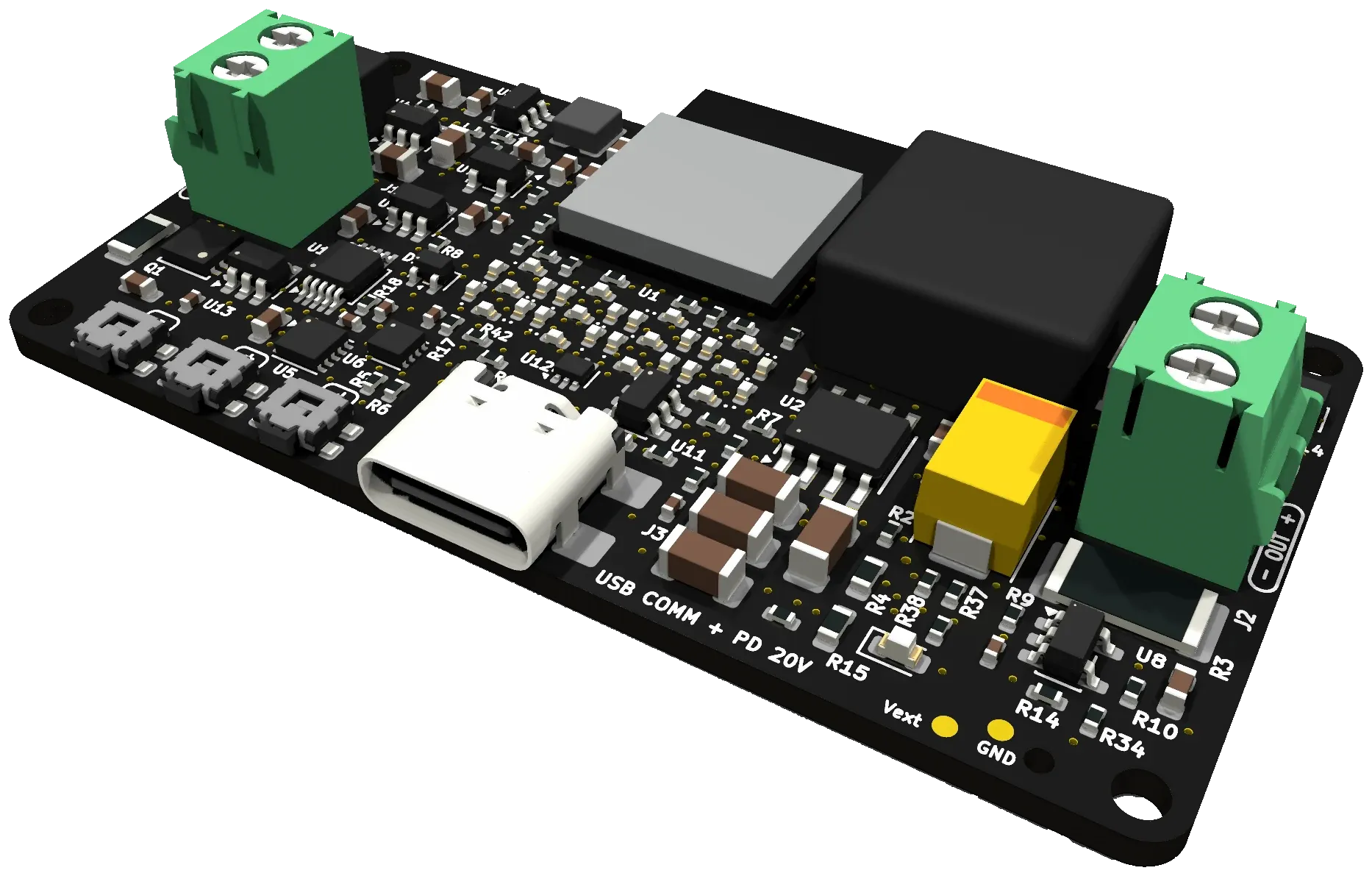
Overview
QuickVolt is a compact, digitally controlled DC power supply with constant-voltage (CV) and constant-current (CC) regulation, rated for 0 to 31 V and 0 to 4 A. It is operated from its front-panel buttons, a web browser, SCPI over USB, an HTTP and WebSocket API, Bluetooth LE, or QuickVolt Commander for multi-unit control.
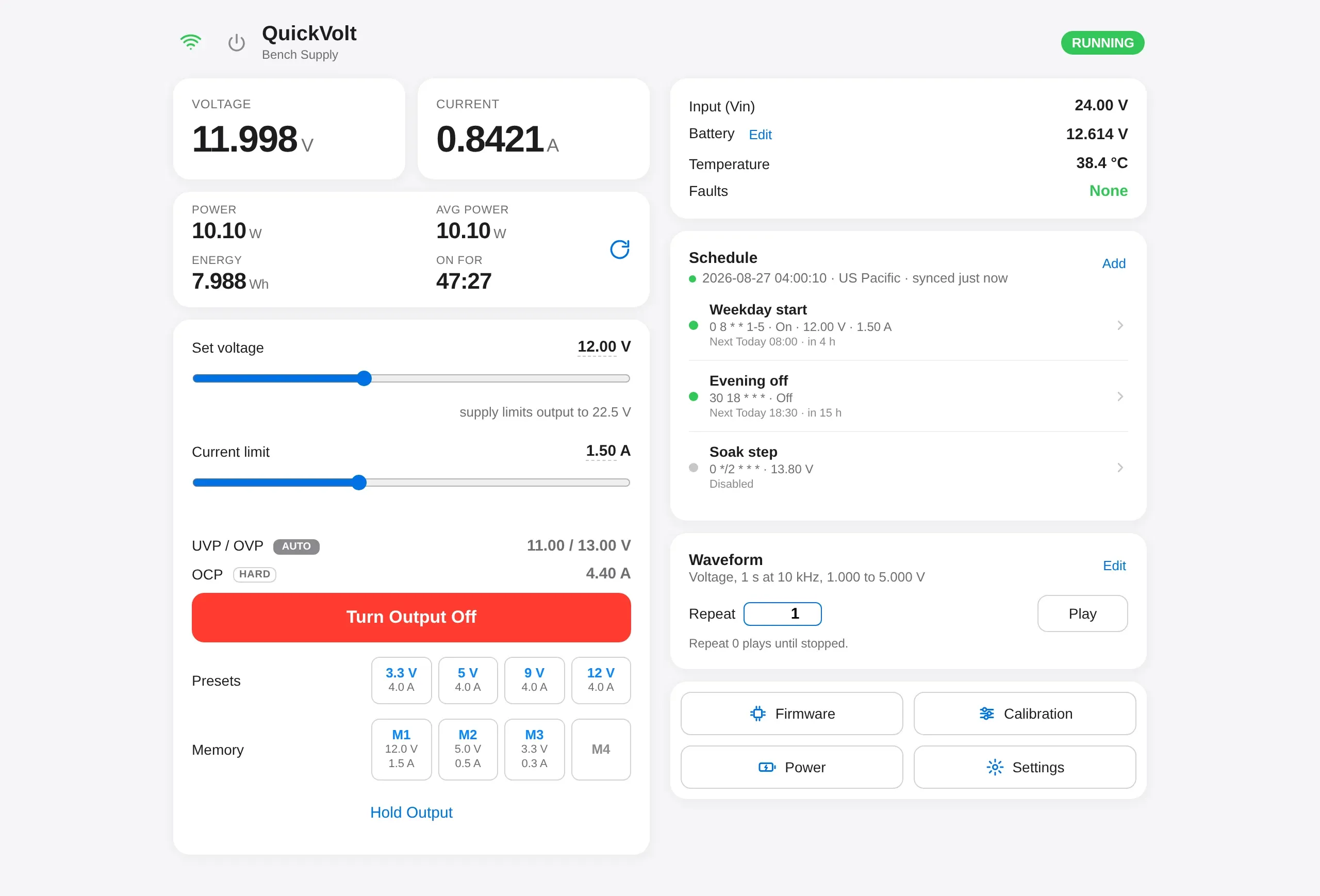
Regulation and protection
A dual 16-bit DAC (DAC80502) generates the voltage and current references. Two error amplifiers compare the sensed output voltage and load current against those references and drive the buck converter's feedback node. CV and CC regulation, and the crossover between them, are performed in analog hardware and do not depend on firmware timing.
Supervisor
Over-voltage, under-voltage, and over-current protection are enforced by a control loop on the ESP32-C6 high-power core. The low-power core runs an independent supervisor: if the control loop stalls or stops while the output is on, the supervisor disables the converter directly, so a firmware failure leaves the output off.
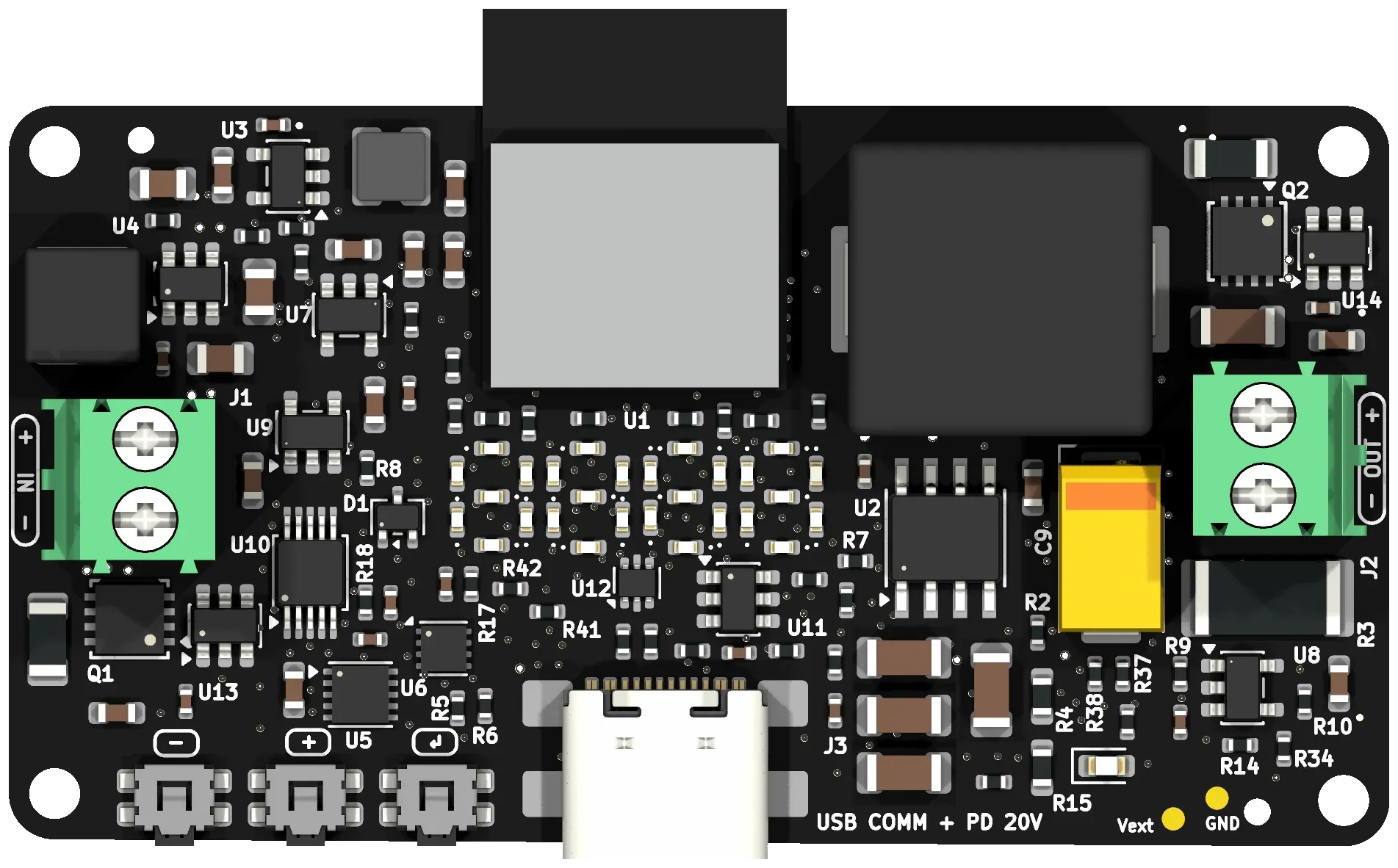
Measurements
A 16-bit ADC (ADS1118) reads back output voltage, output current, input voltage, the auxiliary Vext input, and board temperature. Power, average power, and delivered energy are derived from these readings.
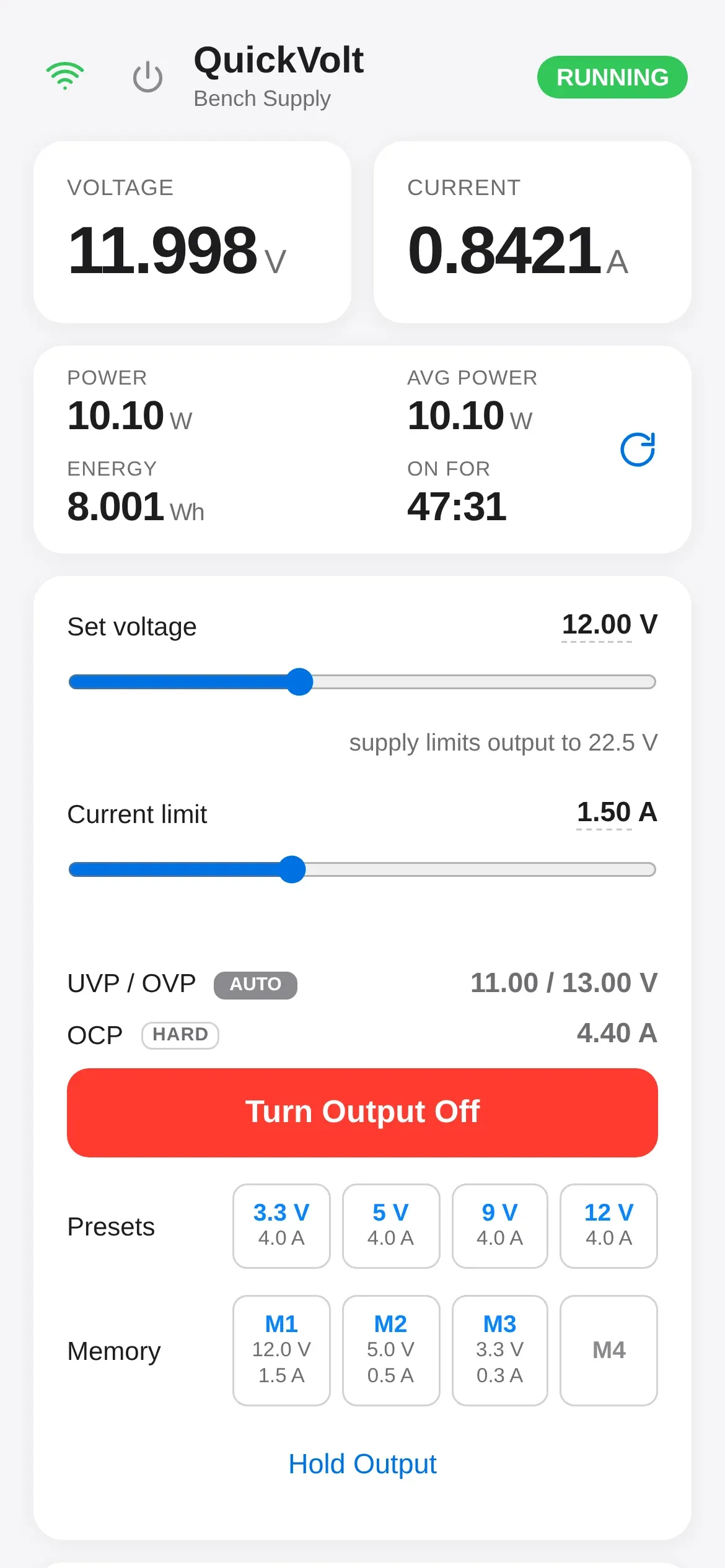
Schedules and fast output
Schedules
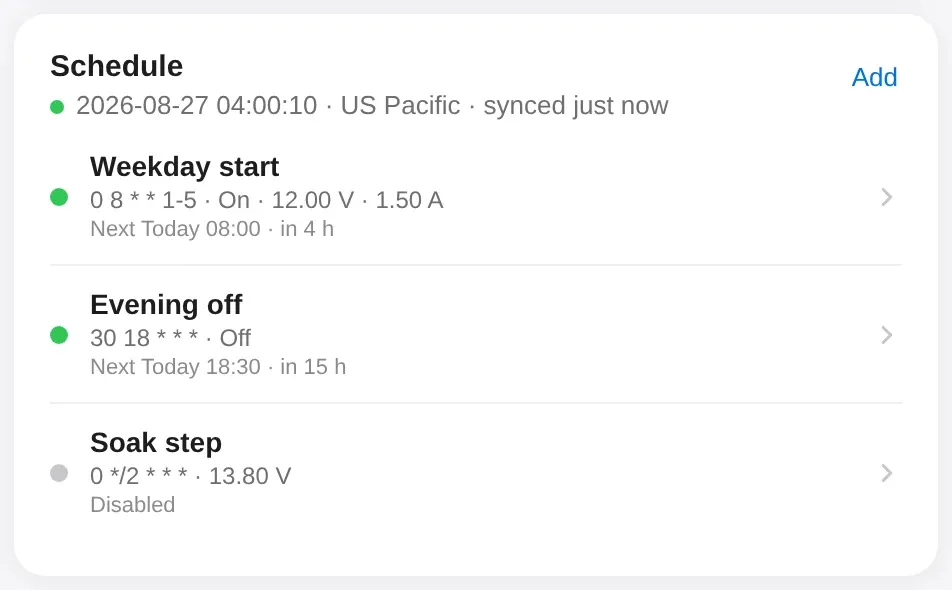
QuickVolt sets its clock from internet time servers and resynchronizes every 15 minutes. Up to 32 cron schedules turn the output on or off or change the setpoints, and are stored on the board through power loss. Until the clock is synchronized, no schedule runs; QuickVolt never acts on an estimated time.
Fast output
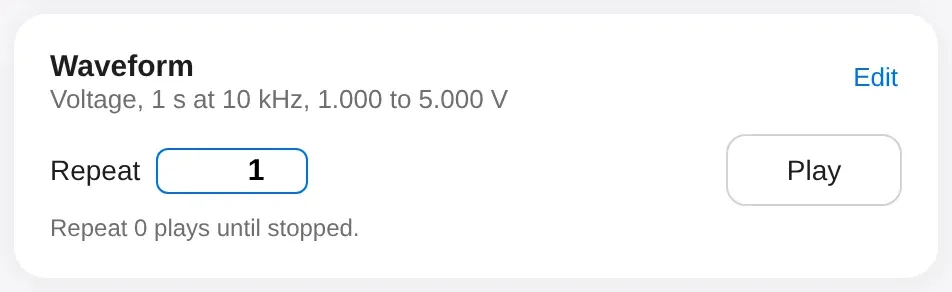
In fast output mode, the voltage or the current limit is driven from a sequence of samples at a fixed rate between 1 and 50 kHz, and the other setpoint is held as a cap. QuickVolt stores one waveform of up to 129,024 samples, retained through power loss, or plays samples streamed live from a computer.
QuickVolt Commander
QuickVolt Commander is a host application that locates QuickVolt boards on the network and presents them in a single browser page. It shows the voltage, current, and temperature of every board, controls setpoints and output for individual boards or groups, and provides a single control that stops all boards. Control sources drive the setpoints of subscribed boards from a computed signal, such as audio. Commander runs on a Mac or Linux computer.
Power saving
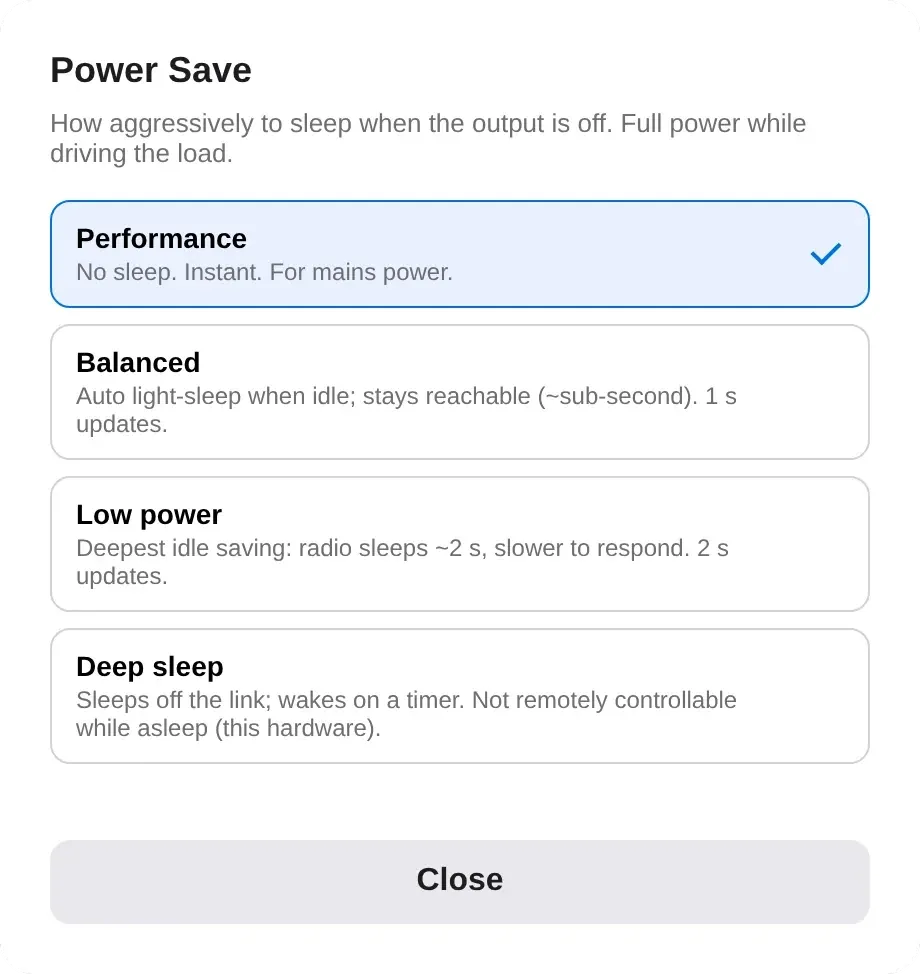
Power-save profiles apply only while the output is off. Whenever the output is on, a fault is active, or a calibration or waveform is running, QuickVolt runs at full performance.
Profiles
Performance never sleeps. Balanced uses light sleep and responds in under a second. Low power sleeps the Wi-Fi radio between wake-ups, every 10 seconds on a Wi-Fi 6 network. Deep sleep wakes on a timer and in time for scheduled actions.
Licensing and updates
The QuickVolt hardware design will be released under CERN-OHL-S v2, and QuickVolt Commander under the Apache License 2.0. Firmware updates install over the air.
Specifications
Hardware revision v2.2 with firmware 0.1.0-alpha. Resolution figures are not accuracy figures; accuracy depends on calibration.
Output
- Voltage
- 0 to 31 V, limited to the input voltage minus 1.5 V
- Current limit
- 0 to 4 A
- Over-current trip
- 4.4 A maximum, adjustable down to 0.1 A
- Over-voltage protection
- Automatic, 1 V above the setpoint, or manual, 1 to 32 V
- Under-voltage protection
- Automatic, 1 V below the setpoint, or manual
- Setpoint resolution
- 16-bit converter; 0.01 V and 0.001 A from the buttons
- Voltage rise rate
- 150 V/s soft start
- Converter
- Synchronous buck, 1 MHz, with analog constant-voltage and constant-current loops
- Fast output
- Voltage or current driven from samples at 1 to 50 kHz; up to 129,024 stored samples
Input
- Terminal input
- 4 to 36 V DC; 36 V absolute limit
- USB-C input
- USB Power Delivery, 20 V requested
- Minimum to enable output
- 6.5 V, and setpoint plus 1.5 V
- Protection
- Reverse-polarity protection and a 5 A one-time fuse on each input
Measurement
- Quantities
- Output voltage and current, input voltage, Vext, board temperature; power, average power, and energy derived
- Converter
- 16-bit, about 730 conversions per second while active
- Current sensing
- 20 mΩ, 1 % shunt in the output return
- Current resolution
- About 0.16 mA
- Over-temperature limit
- 85 °C
Control and connectivity
- Processor
- Espressif ESP32-C6, RISC-V
- Wi-Fi
- 802.11b/g/n/ax, 2.4 GHz, with target wake time; station or hotspot
- Bluetooth
- Bluetooth LE
- USB
- USB-C, USB 2.0 serial for SCPI
- Interfaces
- Web control panel, HTTP API, WebSocket, SCPI, Bluetooth LE GATT, mDNS discovery
- Local controls
- Four-digit seven-segment display, three buttons, status light
- Clock and schedules
- Internet time, POSIX time zones, 32 cron schedules with 5-second resolution
Physical
- Board size
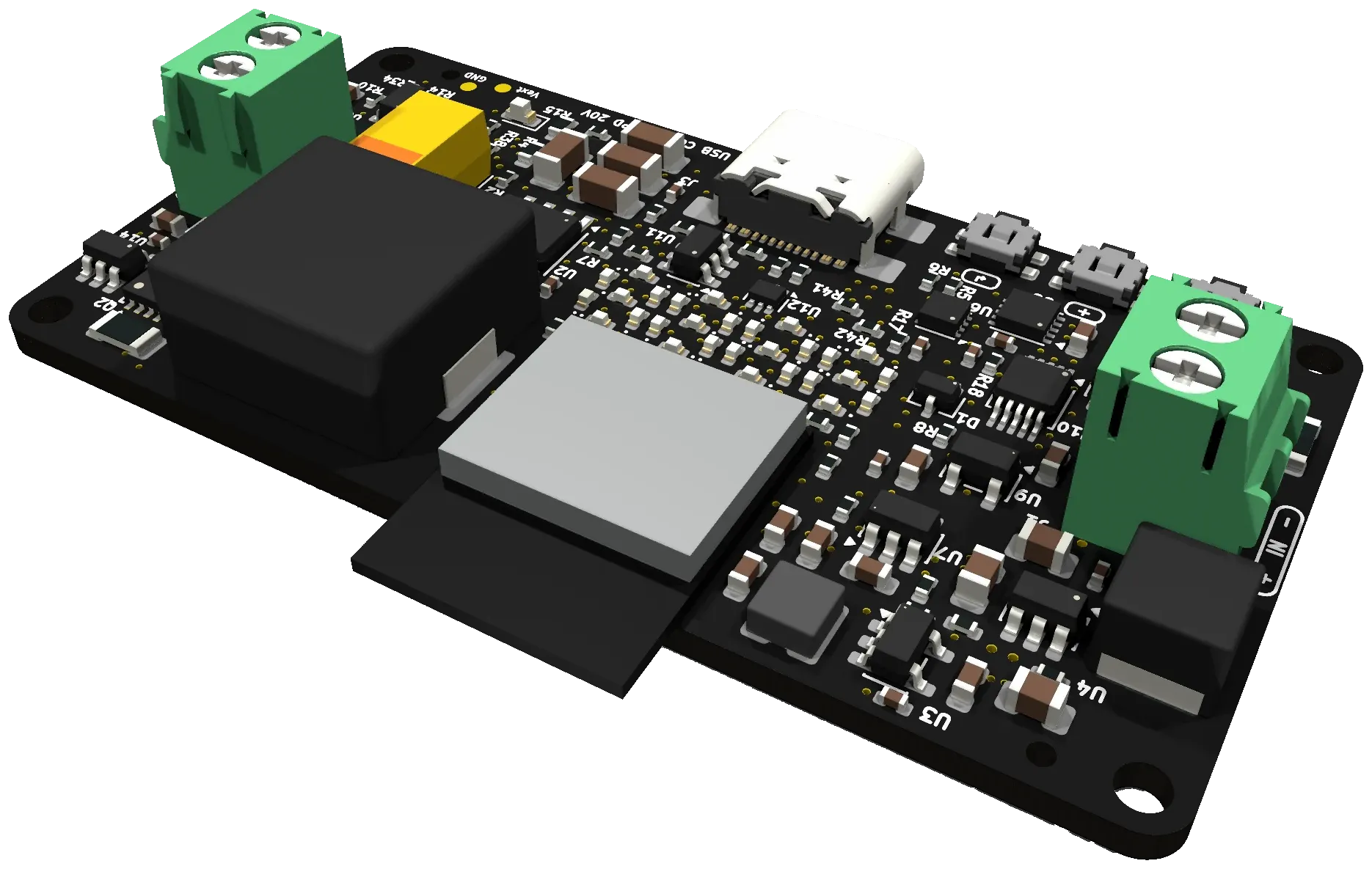
- 60 by 32 mm, 1.6 mm thick, four layers
- Mounting
- Four 2.2 mm holes for M2 screws, 56 by 28 mm pattern
- Connectors
- Two 2-way screw terminals, 3.5 mm pitch; USB-C; Vext and GND test pads